All-on-4® is a treatment approach that replaces an entire upper or lower arch using a limited number of implants and a fixed prosthesis placed on the same day as surgery. Designed for people who are missing most or all teeth or who need full-arch extractions, this method aims to restore the appearance and core function of natural teeth—chewing, speaking, and smiling—without the temporary gap many patients fear.
What makes this solution distinctive is the combination of careful planning and immediate provisionalization: implants are positioned strategically to maximize support, and a temporary bridge is attached during the same appointment so you don’t leave without teeth. That provisional prosthesis provides function and aesthetics while the implants integrate with the jawbone and the tissues heal.
The approach is rooted in decades of clinical experience and contemporary implant science. When planned and executed by a team skilled in implant dentistry, All-on-4® can streamline treatment for many full-arch cases while reducing the need for bone grafting in suitable candidates.
The All-on-4® concept relies on placing four implants in locations that provide optimal stability for an entire arch. Two implants are typically placed near the front of the mouth where bone is denser, and two are angled toward the back to increase the prosthesis support and resist rotational forces. This strategic placement often allows for secure anchoring with fewer fixtures than traditional full-arch approaches.
Modern imaging tools—such as CBCT scans and digital treatment planning—play a central role in determining the exact implant positions and angulations. With these technologies, your clinician can evaluate bone quality, plan restoratively driven implant placement, and anticipate how the final prosthesis will sit and function, improving predictability and comfort.
For patients, the practical benefits include a stable, fixed-feeling prosthesis that eliminates the slipping and gliding sometimes associated with removable dentures. Because the implants are placed to take advantage of the strongest available bone, many individuals avoid additional grafting procedures that would otherwise lengthen treatment time and recovery.
On the day of treatment you can expect a structured, team-based process. After anesthesia or sedation to ensure comfort, the surgical team places the implants according to the preoperative plan. Once the implants are secured, a provisional fixed bridge is attached to restore immediate function and appearance. The process is coordinated so you can leave with a reliable temporary set of teeth.
During the initial healing phase, it’s normal to experience mild swelling and some soreness, which your clinician will manage with recommended medications and aftercare instructions. The immediate provisional is designed to be functional but will be adjusted for comfort and to protect the implants while the bone integrates. Follow-up visits during the first few months focus on monitoring healing and making minor adjustments as needed.
After an integration period—commonly a few months, depending on individual healing—your provisional is replaced with a final prosthesis crafted for long-term durability and esthetics. That final restoration is refined to provide natural contours, proper bite alignment, and materials that balance strength with a lifelike appearance.
Replacing an entire arch with a fixed restoration can improve chewing efficiency and speech compared with removable alternatives. A fixed prosthesis distributes chewing forces through the implants and into the jawbone, which helps preserve bone levels and facial structure over time. Many patients notice a marked improvement in confidence and day-to-day comfort when their teeth remain secure during eating and speaking.
In addition to functional gains, All-on-4® prostheses are designed to restore facial support lost from missing teeth. The prosthetic teeth and supporting framework recreate lip and cheek fullness, which can have a positive effect on overall appearance. Because the final restorations are custom-made, color, shape, and proportions are selected to complement your facial features and personal preferences.
Maintenance is straightforward: regular home care—thorough brushing and cleaning under the prosthesis where recommended—paired with routine dental visits preserves health and longevity. Your team will provide a tailored maintenance plan to keep the implants and soft tissues healthy for years to come.
Success with full-arch implant care depends on a combination of careful planning, skilled surgical placement, and precise restorative work. Our clinicians bring specialized training in implant dentistry and digitally guided workflows to each case. Dr. Jonathan Ehlers completed an implant residency and a one-year oral surgery internship, and those focused training experiences inform how we plan and execute full-arch restorations.
At the practice level, we combine modern imaging, restorative planning, and patient-centered communication to set realistic expectations and guide each person through the treatment sequence. Collaborative care—where surgical and restorative teams work closely together—reduces surprises, improves fit and function, and enhances the long-term predictability of implant-supported restorations.
When you are evaluating options for replacing a full arch, seek a team that applies proven implant protocols, uses current technology for planning and placement, and offers clear post-operative support. That combination helps ensure the safest path to a durable, natural-looking outcome.
In summary, All-on-4® is an efficient, well-established method to restore a complete upper or lower arch with immediate provisional teeth and long-term fixed restorations. For patients seeking a stable, natural-feeling solution that addresses function and appearance, this approach offers a thoughtful alternative to traditional removable dentures. To learn whether All-on-4® may be the right option for you, contact Tiger Family Dental for more information and a personalized consultation.
1All-on-4 is a registered trademark of Nobel Biocare


All-on-4® is a full-arch treatment concept that replaces an entire upper or lower set of teeth using only a limited number of implants and a fixed prosthesis. The technique relies on placing implants in strategic positions to support a rigid, screw-retained bridge that restores function and appearance. A provisional prosthesis is typically attached on the day of surgery so patients leave with immediate teeth while the implants begin to integrate.
The approach emphasizes restoratively driven planning so the implants are placed for optimal prosthetic support rather than simply where bone is most abundant. Modern workflows combine 3D imaging and digital planning to define exact implant positions and angulations before surgery. This planning reduces intraoperative guesswork and improves the predictability of the immediate restoration.
Good candidates for All-on-4® are adults who are missing most or all teeth in an arch or who require full-arch extractions and desire a fixed solution rather than removable dentures. Candidates should have adequate overall health to undergo implant surgery and be willing to follow postoperative care and follow-up appointments. A clinical examination and CBCT imaging are required to assess bone quality, anatomy, and any conditions that may affect healing.
While All-on-4® can reduce the need for extensive bone grafting in many cases, candidacy is determined case by case based on bone volume and distribution. Medical history, smoking status, and systemic factors that influence bone healing are also evaluated during treatment planning. Your clinician will outline whether immediate provisionalization is appropriate or whether staged treatment is safer for your situation.
The All-on-4® concept uses implant placement that maximizes available bone and mechanical advantage to support an entire arch with fewer fixtures. Typically, two anterior implants are placed more vertically in denser bone while two posterior implants are tilted posteriorly to extend the prosthetic support and resist rotational forces. This distribution creates a stable support platform that spreads occlusal loads across the arch and into the jaw.
Angulated posterior implants allow longer implant engagement in available bone and can often avoid anatomical structures that would otherwise limit placement. The immediate provisional prosthesis is designed to be rigid and splinted across the implants, which further enhances stability during the initial healing phase. Proper surgical and prosthetic planning are essential to ensure the implants share forces predictably and protect long-term success.
On procedure day you will be cared for by a coordinated surgical and restorative team to ensure comfort and efficiency throughout the appointment. After anesthesia or sedation is administered, implants are placed according to the preoperative digital plan and a provisional fixed bridge is attached so you leave with functional teeth. The team will provide immediate postoperative instructions and schedule follow-up visits to monitor healing and adjust the provisional as needed.
Expect some swelling, soreness, and mild bruising during the first few days, which are common and manageable with prescribed or recommended medications and cold therapy. Diet will initially be modified to protect the implants and provisional restoration while osseointegration begins. Your clinician will review safe eating, cleaning, and activity guidelines to promote predictable healing and reduce the risk of complications.
The initial healing and osseointegration period commonly ranges from a few months, often around three to six months, depending on individual factors and implant stability. During this time the provisional prosthesis provides function and aesthetics while the bone remodels around the implants to form a stable biological interface. Follow-up visits focus on monitoring bone and soft tissue health, evaluating implant stability, and making small adjustments to the provisional restoration as necessary.
Once the clinician determines that sufficient integration and soft tissue maturation have occurred, impressions or digital scans are taken for the final prosthesis. The definitive restoration is then fabricated to optimize contour, occlusion, and esthetics for long-term function. Regular maintenance visits after delivery of the final prosthesis help preserve peri-implant health and prosthetic performance over time.
One advantage of the All-on-4® approach is its frequent ability to avoid extensive bone grafting by using tilted posterior implants and anterior sites with denser bone. That said, the need for grafting depends on each patient’s anatomy, the quality and quantity of remaining bone, and the planned implant positions. A CBCT scan and clinical evaluation determine whether additional grafting or sinus augmentation is necessary to achieve long-term implant support.
If grafting is recommended, it will be discussed as part of the treatment plan along with the expected timeline and how it affects provisionalization. In some scenarios a staged approach with grafting followed by delayed implant placement provides the most predictable long-term outcome. Your surgical team will identify the safest, most biologically sound path for your case during consultation and planning.
Postoperative care begins with following the clinician’s immediate instructions for oral hygiene, diet, and activities to protect the implants and provisional restoration. Routine home care includes careful brushing of the prosthetic teeth and meticulous cleaning beneath the bridge where recommended using interdental brushes, floss designed for implants, or water irrigation as advised by your clinician. Proper plaque control and soft tissue care are essential for preventing peri-implant inflammation.
Long-term maintenance includes regular dental checkups and professional cleanings tailored for implant-supported prostheses to monitor tissue health and prosthetic integrity. Your team will provide a personalized maintenance schedule and train you on the specific tools and techniques that work best for your restoration. Timely attention to any changes in bite, looseness, or discomfort helps address issues early and protect the longevity of the implants and prosthesis.
Functionally, All-on-4® restorations restore chewing efficiency and speech more predictably than many removable options because the fixed prosthesis transfers occlusal forces through the implants to the jawbone. Patients frequently report greater confidence while eating and speaking with a rigid, nonremovable bridge in place. The design of the prosthesis also allows clinicians to establish a stable bite and proper occlusal relationships for long-term comfort.
Esthetically, final restorations are custom-designed to restore tooth form, color, and facial support lost due to missing teeth, helping recreate lip and cheek fullness. Materials and contours are chosen to harmonize with facial features and patient preferences while balancing strength and a natural appearance. The combination of improved facial support and a lifelike tooth arrangement can produce meaningful enhancements to overall facial esthetics.
Predictable outcomes rely on advanced imaging, such as CBCT, digital treatment planning, and often guided surgical protocols that translate the restorative plan into precise implant placement. These technologies allow clinicians to visualize bone anatomy, plan implant angulation for optimal load distribution, and fabricate surgical guides or provisional restorations that match the planned prosthetic outcome. Digital workflows enhance communication between surgical and laboratory teams and reduce intraoperative variability.
Equally important is clinical expertise in full-arch implant care, including surgical experience, prosthetic skill, and coordinated team-based planning. Focused training in implantology and guided workflows helps clinicians anticipate anatomic challenges and design restorations that balance function, hygiene access, and esthetics. Clinicians who combine digital tools with proven surgical and restorative protocols increase the likelihood of long-term, stable results.
To determine candidacy for All-on-4®, schedule a consultation that includes a thorough oral examination, medical history review, and CBCT imaging to evaluate bone anatomy and identify any conditions that could affect treatment. During this appointment the surgical and restorative team will discuss treatment goals, outline the planned workflow, and explain the expected healing sequence so you understand each phase of care. This visit is an opportunity to ask detailed questions about surgical steps, provisionalization, and long-term maintenance without focusing on pricing or financing.
If you would like to explore All-on-4® further, contact Tiger Family Dental at 991 Winchester Drive, Suite 1 in Sedalia, MO to request a personalized consultation. The practice can coordinate imaging and planning so you receive a clear, clinically based recommendation tailored to your oral health and restorative goals. A structured evaluation with digital planning is the best way to identify the safest, most predictable path to a fixed full-arch solution.
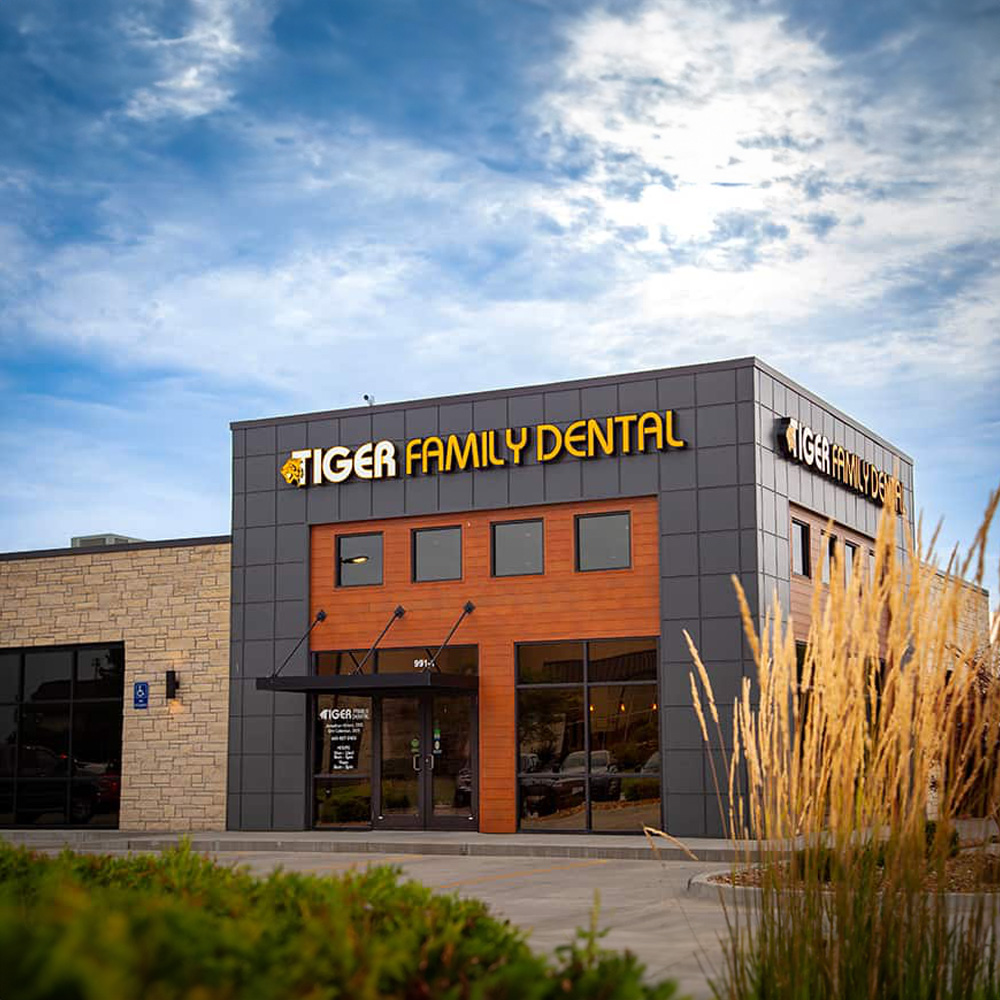
Looking to schedule your next dental visit or learn more about our services?
Getting in touch with Tiger Family Dental is simple! Our friendly team is ready to help you book appointments, answer questions about treatments, and address any concerns. Whether you’d like to call, or use our convenient online form, we’re here to assist you. Take the first step toward a healthy, confident smile — contact us today and experience the difference personalized dental care can make.