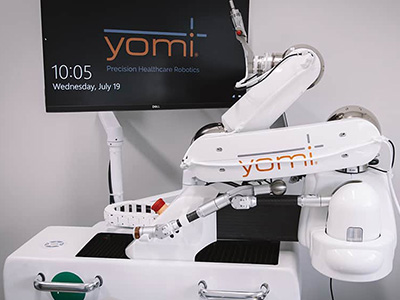
Yomi is a computer-assisted, robotic guidance system designed specifically for dental implant procedures. It pairs preoperative planning software with intraoperative guidance, giving the clinician visual, audio, and tactile cues that support highly accurate implant placement. Rather than replacing the surgeon’s judgement, Yomi augments it—helping translate a carefully crafted treatment plan into consistent, repeatable results.
Because the system synchronizes the planned implant position with real-time feedback, surgeries can be less invasive and more controlled than traditional freehand techniques. Patients often benefit from a streamlined experience that emphasizes predictable outcomes, gentle tissue handling, and a focused pathway from planning to restoration.
At the core of Yomi is a workflow that begins with three-dimensional imaging and a digital treatment plan. Using CBCT scans and implant planning software, the clinician determines ideal implant angulation, depth, and prosthetic position before the procedure begins. That virtual blueprint sets measurable targets for the surgical phase instead of relying on estimation alone.
During the operation, the robotic arm and navigation interface provide continuous feedback so the clinician can feel and see when they are aligned with the plan. This augmented guidance restricts drill motion outside the planned trajectory while still allowing the surgeon full control—yielding a balance between robotic precision and human expertise.
The result is a level of reproducibility that supports complex restorative goals. For multi-implant cases, full-arch restorations, or sites with limited bone, precise placement is critical to long-term function and esthetics. Robotic guidance helps protect critical anatomical structures and ensures implants are positioned to best support the final prosthesis.
Accuracy in implant positioning reduces the risk of complications and improves the likelihood of successful osseointegration. By guiding drills to the planned depth and trajectory, Yomi minimizes deviations that can compromise adjacent teeth, nerves, or sinus anatomy. This precision matters both immediately and over the long term, as correct implant orientation simplifies restorative steps and load distribution.
Robotic-assisted placement also supports minimally invasive techniques. When the implant enters the site at the intended angle and depth, the need for extensive flap elevation or bone modification can be reduced. That conservation of soft tissue and bone often translates into gentler healing and a shorter recovery phase for patients.
For clinicians, the system’s repeatability builds procedural confidence. Predictable implant position makes subsequent stages—healing, provisionalization, and final restoration—more straightforward. The cumulative effect is a more efficient treatment pathway with outcomes that align closely with the original restorative plan.
Before surgery, the process centers on communication and planning. Patients undergo a CBCT scan and a clinical exam so the team can design an implant strategy that addresses both function and esthetics. The preoperative discussion covers the digital plan, the anticipated sequence of care, and realistic healing expectations without delving into pricing or financing details.
On the day of the procedure, robotic guidance works behind the scenes. Most patients describe the experience as calmer and more focused because the clinical team follows a rehearsed plan and the guidance system helps limit unnecessary movement. Local anesthesia and, when appropriate, sedation options are used to maintain comfort throughout the case.
After surgery, recovery typically focuses on simple, evidence-based aftercare: managing swelling, following a short soft-food timeline when advised, and maintaining oral hygiene around the surgical site. Because the procedure often requires less tissue manipulation, many patients report a more comfortable early healing period compared with more invasive approaches.
The treatment journey with robotic-guided implants moves through defined phases. It begins with diagnostic imaging and digital planning, advances to guided surgical placement, and culminates in restorative care where a crown, bridge, or full-arch prosthesis is delivered. This continuity between planning and restoration helps preserve the intended prosthetic outcome.
Digital tools enable better coordination between surgical and restorative teams. By planning with the final restoration in mind, implant positions are chosen to support optimal esthetics, access for cleaning, and occlusal function. Whether the case requires a single-tooth implant or an All-on-X style solution, clear planning reduces surprises and streamlines laboratory communication.
Follow-up visits assess healing and integration, and once the implant is stable, the prosthetic phase begins. Because the implant was positioned to match restorative goals, impression-taking (digital or conventional) and final fabrication are typically more straightforward. The predictable alignment of components supports durable, comfortable restorations that meet both functional and cosmetic expectations.
Robotic guidance is a tool, and its value depends on the experience and judgment of the clinician using it. Our clinicians combine surgical training with implant-specific residencies and ongoing education, allowing them to leverage Yomi’s guidance within a framework of sound clinical decision-making. That pairing of skill and technology is what produces consistent outcomes.
Our practice brings modern imaging, digital planning, and restorative coordination together in a single care pathway. That integration reduces the friction that can occur when multiple providers are involved, helping patients complete their treatment with fewer unknowns and a clearer timeline for each phase of care.
We also prioritize clear communication and comfort throughout the process. From the diagnostic appointment through restorative delivery, the clinical team explains each step, answers questions, and adapts the plan to each patient’s anatomical needs and personal goals. This thoughtful approach ensures that advanced technology serves the patient, not the other way around.
In summary, Yomi robotic-assisted implants combine digital planning with real-time guidance to improve the precision and predictability of implant placement. When paired with experienced clinicians and a coordinated restorative plan, this technology supports gentler procedures, reliable prosthetic outcomes, and a smoother healing experience. If you would like to learn more about how robotic-guided implants could fit into your treatment plan, please contact us for additional information.


Yomi is a computer-assisted robotic guidance system designed specifically for dental implant procedures. It pairs three-dimensional preoperative planning software with intraoperative navigation to provide visual, audio and tactile cues that support precise implant placement. The system helps clinicians translate a carefully crafted digital treatment plan into consistent, repeatable surgical results.
By synchronizing the planned implant position with real-time feedback, Yomi reduces reliance on estimation and increases reproducibility across a range of case types. The technology is engineered to support minimally invasive approaches when clinically appropriate and to maintain the surgeon's control throughout the procedure. Patients benefit from a coordinated workflow that connects planning directly to restoration.
Yomi uses a tracked robotic arm and navigation interface to continuously compare the live drill position to the planned trajectory. This comparison provides tactile resistance and visual cues when the drill approaches planned boundaries, helping limit unwanted deviation in angulation and depth. Restricting motion outside the prescribed path reduces the risk of compromising adjacent teeth, nerves, or sinus anatomy.
Accurate depth and angulation enhance initial implant stability and simplify restorative steps, which supports long-term function and esthetics. The system can also help preserve soft tissue and bone by enabling smaller incisions and fewer extensive bone modifications when appropriate. Overall, Yomi enhances intraoperative control while leaving clinical judgment and decision-making with the surgeon.
Many adults who need one or more dental implants may be evaluated for suitability with Yomi-guided placement. Ideal candidates include patients with single-tooth gaps, multiple missing teeth, or those considering full-arch restorations where precise implant positioning is important for prosthetic support. Patients with complex anatomy, limited bone volume, or proximity to critical structures often derive added benefits from the system's guidance.
A comprehensive clinical exam and CBCT imaging are required to determine candidacy and to create a tailored digital plan. Medical history, bone quality, oral hygiene, and smoking status are also considered when planning any implant therapy. Your clinician will review these factors and explain whether robotic guidance is an appropriate component of your personalized treatment plan.
The planning phase begins with diagnostic records such as a cone beam CT (CBCT) scan and intraoral scans or impressions when needed. These images are used to design a three-dimensional treatment plan that defines implant position, angulation, and the intended restorative outcome. The clinician reviews the plan with the patient and explains how implant placement will support the final crown, bridge, or full-arch prosthesis.
This preoperative stage also identifies anatomic limitations and helps the team select appropriate implant dimensions and a surgical approach. Patients receive instructions about medications, preoperative hygiene, and any sedation options to be used on the day of surgery. Clear communication during planning reduces surprises and sets realistic expectations for healing and restorative timing.
On the day of surgery the team confirms the digital plan using the CBCT reference data and positions the patient for the procedure. Local anesthesia and, when appropriate, sedation are administered to keep the patient comfortable throughout the case. The clinician operates the drill while the robotic guidance provides feedback or resistance to maintain the planned trajectory and depth.
Because the system helps restrict motion outside the intended path, tissue handling can be more conservative and flap elevation may be minimized when indicated. The surgeon maintains control at all times and can adjust the plan intraoperatively based on clinical findings. After implant placement, the site is managed according to standard postoperative protocols and the team provides instructions to support healing.
Recovery after Yomi-assisted implant placement often reflects the minimally invasive aspects of the procedure, which can mean less swelling and early discomfort for some patients. When extensive flap elevation or bone modification is avoided, soft tissue healing tends to be more straightforward and restoration timelines may be smoother. Individual healing varies based on the complexity of the case and the patient’s overall health.
Postoperative care follows evidence-based guidance, including pain control, careful oral hygiene around the surgical site, and a short soft-food timeline when recommended. Follow-up visits monitor integration and soft tissue healing, and your clinician will advise when to begin provisional and final restorative steps. Good adherence to aftercare and follow-up helps support predictable osseointegration and long-term success.
Freehand placement depends entirely on the clinician's spatial judgment and experience and can result in greater variability in angulation and depth. Static surgical guides are printed templates that position drills according to the plan but do not provide live feedback or tactile restriction during drilling. Yomi combines the planning precision of a static guide with real-time navigation and haptic feedback, creating an active guidance system during drilling.
This dynamic interaction allows the surgeon to feel limits and correct in real time while preserving the ability to respond to intraoperative findings. Compared with static guides, Yomi can offer greater adaptability and may reduce certain positional errors, particularly in complex or multi-implant restorations. Each approach has appropriate clinical indications, and your provider will recommend the best tool based on anatomy and restorative goals.
The clinician remains the primary decision-maker and operator throughout the procedure, using Yomi as an advanced guidance tool rather than an autonomous surgeon. Surgeons plan the case, interpret imaging, and make judgment calls about soft tissue management, bone modification, and implant selection. During drilling, the clinician controls speed and pressure while the system provides feedback to help maintain the planned trajectory.
Experienced clinicians combine surgical training with implant-specific education to use Yomi effectively and safely within their practice. Ongoing training and careful case selection are essential to integrate the technology into a clinical workflow. When technology and clinician expertise are aligned, patients benefit from the strengths of both human judgment and robotic-assisted precision.
Restoration-driven planning ensures implants are placed to optimize esthetics, emergence profile, and access for hygiene, which benefits both function and appearance. Digital planning aligns implant position with the intended prosthesis so crowns, bridges, and full-arch prostheses can be fabricated with predictable contours and occlusion. This reduces adjustments during the restorative phase and helps the laboratory produce prosthetics that fit the implant orientation.
Digital records and intraoperative accuracy enable straightforward impression taking, whether digital or conventional, because implant platforms are positioned as planned. For multi-implant or full-arch cases, precise alignment streamlines provisionalization and final restoration steps. Coordinated planning between surgical and restorative teams improves the efficiency and predictability of the entire treatment sequence.
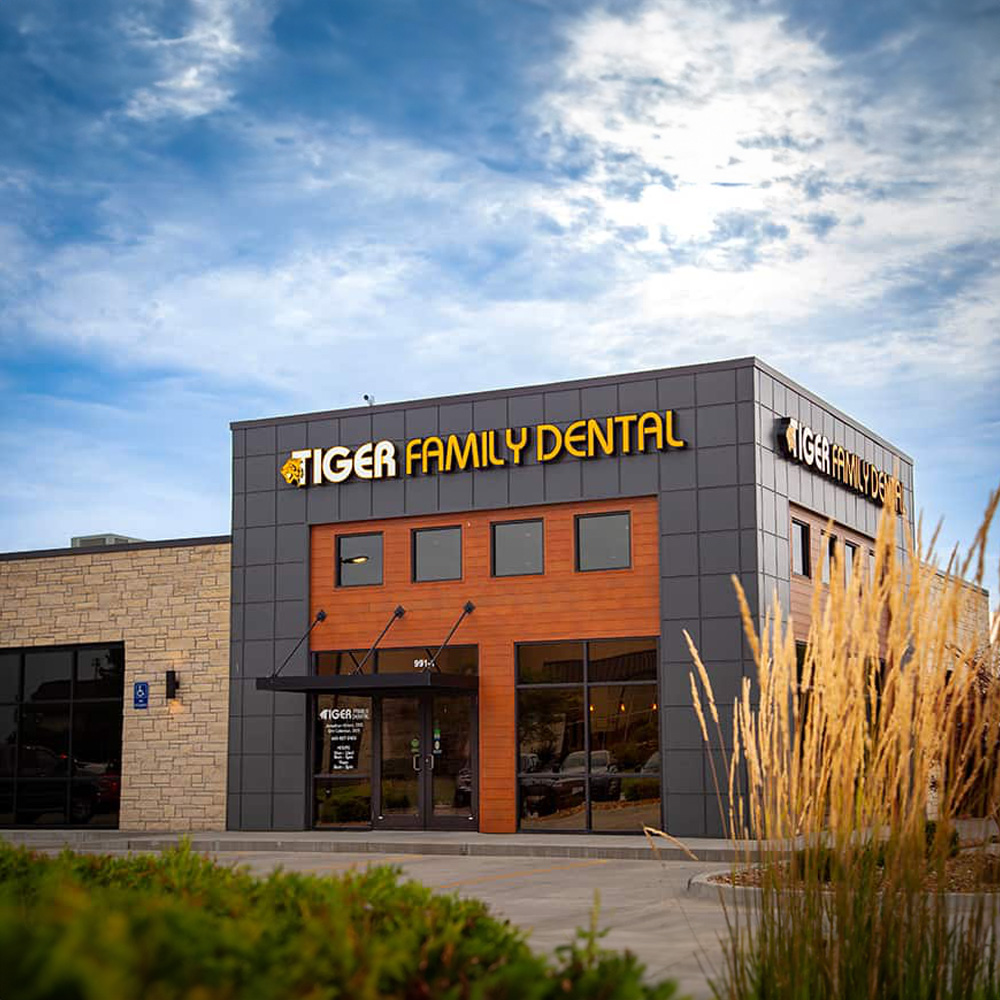
Tiger Family Dental combines modern imaging, digital planning, and clinician training to deliver robotic-guided implant care tailored to each patient's needs. Our team emphasizes clear communication, coordinated restorative planning, and a focus on gentle, patient-centered treatment throughout the implant journey. We integrate Yomi's guidance into a broader care pathway that prioritizes precision and predictable outcomes.
Patients in Sedalia and the surrounding area can expect thorough diagnostic evaluation, CBCT-based planning, and careful follow-up as part of their implant care. We work to ensure each patient understands the treatment timeline, healing expectations, and restorative plan before proceeding. If you have questions about whether robotic-assisted implants are right for you, contact our office to schedule a consultation.
Looking to schedule your next dental visit or learn more about our services?
Getting in touch with Tiger Family Dental is simple! Our friendly team is ready to help you book appointments, answer questions about treatments, and address any concerns. Whether you’d like to call, or use our convenient online form, we’re here to assist you. Take the first step toward a healthy, confident smile — contact us today and experience the difference personalized dental care can make.